Pomodoro Dial › The Pomodoro Technique
The Pomodoro Technique, explained
A 25-minute focus session followed by a short break is a useful starting point for the Pomodoro Technique. The full method also includes planning, estimating effort, handling interruptions and reviewing your work. This guide explains the timer routine and how to try it with Pomodoro Dial.
This is an independent guide and timer. For the complete method, see Francesco Cirillo's official Pomodoro Technique site.
What it is
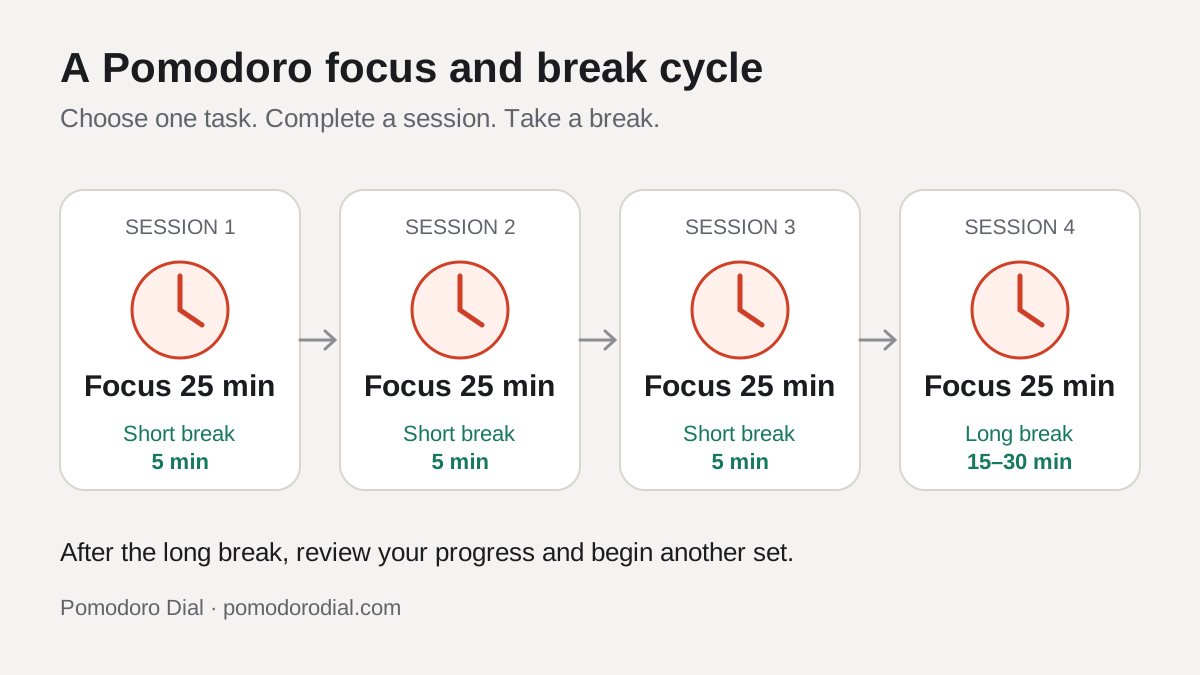
The Pomodoro Technique is a way of working in short, timed sessions. You pick one task, set a timer for 25 minutes, and work on nothing else until it rings. Then you take a five-minute break. Each 25-minute session is called a pomodoro. After four of them you take a longer break of 15 to 30 minutes.
The timer gives each work session a clear boundary and reminds you to stop for a break. Planning what to work on and reviewing what you completed matter too; a countdown by itself is only part of the method.
Where it comes from
Francesco Cirillo began developing the technique in 1987 as a university student, using a tomato-shaped kitchen timer. Pomodoro is the Italian word for tomato. His method grew to include planning, interruption management, estimation and reflection.
That wind-up timer is why the timer on this site is drawn as a dial with sixty ticks: you can see the minutes leaving, the way Cirillo could.
A six-step starting routine
Here is a practical way to start using the timer. It summarizes a focus-and-break cycle, rather than the full set of objectives in Cirillo's book.
- Choose a task. One task, defined clearly enough that you know what progress looks like for this session. "Write the introduction" is a task. "Work on the report" is not.
- Set the timer to 25 minutes. Winding the timer is a commitment: for the next 25 minutes, this is the only thing.
- Work until it rings. If another thought or errand comes to mind, write it on a list and return to the task. A pomodoro is indivisible. If it is truly interrupted, it does not count, and you start a fresh one.
- Mark the pomodoro and take a 5-minute break. Stand up, look away from the screen, get some water. The break is part of the method, not a reward you may skip.
- After four pomodoros, take a longer break. Set aside 15 to 30 minutes before beginning another set.
- Record and review. Keep a count of pomodoros per task. Compare your estimates with completed sessions so you can plan similar work more realistically.
In Pomodoro Dial you can use a tasks list with estimates, a dial that winds down, a chime at the end, and breaks that queue up automatically. The default is a long break after every fourth focus session. Finished focus sessions are counted on the active task; reviewing the record and planning your next task are up to you.
What the routine can help with
A specific starting point
Instead of deciding to finish an entire report, choose a concrete next step and give it one timed session. This makes the commitment smaller and gives you a point at which to review progress.
A record for planning
Counting completed sessions gives you a record to compare with your estimates. If a kind of task repeatedly takes longer than planned, allow more time for it next time. Pomodoro Dial can count sessions on your active task and export your daily totals.
A reminder to take breaks
A 2011 experiment by Atsunori Ariga and Alejandro Lleras found that brief task interruptions helped maintain performance on a prolonged attention task. It studied a laboratory task, not the Pomodoro Technique or an ideal 25/5 schedule. It supports trying breaks, but does not establish one best interval for every person or activity.
One task at a time
Choosing one task and keeping a note for other ideas gives you a clear rule when distractions appear. The break timer then provides a reminder to return. Try the routine and judge it by whether it helps your work, rather than by how many sessions you accumulate.
How long should a pomodoro be?
Twenty-five minutes of focus and five minutes of rest is the classic starting schedule. The alternatives below are timer presets you can experiment with; they are not evidence-based prescriptions for particular jobs.
| Interval | Suits | Notes |
|---|---|---|
| 25 / 5 | Beginners, mixed work, studying | The classic. Four rounds, then a break of 15 to 30 minutes. |
| 50 / 10 | Writing, programming, settled routines | A one-hour rhythm with fewer restarts. Try it if shorter sessions interrupt your work. |
| 52 / 17 | A longer work-and-break experiment | Popularized by DeskTime's observational analysis of its users. Later analyses found different intervals; this does not prove a universal optimum. |
| 90 / 20 | An extended work session | A longer interval to experiment with when the task and your schedule allow it. Plan time to rest afterwards. |
| 15 / 3 or 10 / 2 | A smaller starting commitment | Try a shorter session if 25 minutes feels difficult to begin, then review whether it helped. |
A practical rule: start with 25. If you regularly hit your stride and resent the bell, move to 50/10. If you struggle to start at all, shorten to 15 or 10 and lengthen once starting feels easy. Change one thing at a time and keep it for a week before judging.
Try a preset: 25 / 5 50 / 10 52 / 17 90 / 20 15 / 3
Handling interruptions
Cirillo separates interruptions into two kinds, and each has a routine.
Internal interruptions come from you: a thought about an email, an urge to check something, a sudden idea for another project. Write it down in one line and return to the task. You can review the note later without having to act on every thought immediately.
External interruptions come from other people. When a request can wait, tell the person you are in the middle of a task, agree on a time to return to it, note it, and follow through. For example: "Can I get back to you at three?" Respond to urgent needs when necessary.
When an interruption truly cannot wait, deal with it, void the pomodoro, and start a new one afterwards. Counting a broken session as a whole one only makes your records lie to you.
Common mistakes
- Skipping breaks because you are "in flow". The point is to rest before you fade. If you constantly want to keep going, lengthen the session instead of dropping the breaks.
- Taking breaks on a screen. Five minutes of scrolling is not rest. Move, look at something far away, drink water.
- Treating the count as a score. More pomodoros is not the goal. Finishing the right work is. A day with four well-chosen sessions can beat a day with twelve scattered ones.
- Several tasks in one session. One task per pomodoro. If a task is smaller than a session, batch small tasks of the same kind into one.
- Starting with an interval you cannot sustain. Try a manageable session length before committing to longer ones.
- Never looking at the record. Estimates only improve when you compare them with what actually happened.
Questions
- How many pomodoros a day?
- There is no required daily count. Your available time, the task and your other commitments all matter. Track completed sessions to improve your estimates, not to meet an arbitrary target.
- What if I finish the task early?
- Use the remaining minutes to review what you did, plan the next step, or polish it. Cirillo calls this overlearning. The session still ends at the bell.
- Can I pause a pomodoro?
- By the rules, no: an interrupted pomodoro is void. A timer that punishes you helps nobody, though, so this one lets you pause. Try to reserve it for real interruptions.
- Is it good for studying?
- You can use it to plan reading, problem sets or revision. Choose a specific activity for each session and check afterwards whether the timing helped you learn and complete the work.
- What if 25 minutes feels too long?
- Try a shorter session, such as 10 or 15 minutes, using the timer's Settings or a preset above. Treat it as an experiment and adjust based on your own experience.
- Do I need an app?
- A kitchen timer works, and it is how the method started. An app can add session counts, tasks, statistics and an optional chime.
Sources
- The official Pomodoro Technique site and Francesco Cirillo's account explain the method's origins and its wider planning and reflection practices.
- Ariga, A. and Lleras, A. (2011), Brief and rare mental “breaks” keep you focused, Cognition, 118(3), 439–443. A study of attention during a laboratory task.
- DeskTime's 2024 review of the 52/17 rule describes the company's observational findings and how subsequent results differed.
Try it now. Pomodoro Dial is free, needs no account, works offline, and keeps your timer settings, tasks and stats on your device.